
Winter soups on Lygon Street are not an afterthought: they are not a concession to the cold, or something to tide you over until the sun returns. In Melbourne’s Little Italy, winter soup is an occasion. It is the pot that has been simmering since morning, filling the room with the kind of warmth that central heating cannot replicate. It is the bowl placed before you with the quiet confidence of someone who has been making this recipe for fifty years and sees absolutely no reason to change a thing.
Soup season in Italy is not a casual affair. From the first cool breath of autumn through the deep months of inverno, la minestra anchors the Italian table. It is the course that comes before the course, the gentle opener that tells you everything you need to know about the kitchen you have entrusted yourself to. On Lygon Street, that tradition has been honoured with the same fierce devotion that Italian migrants carried here from their home regions, decades ago. Pull up a chair. The soup is ready.
Minestrone: Queen of the Italian Winter Table
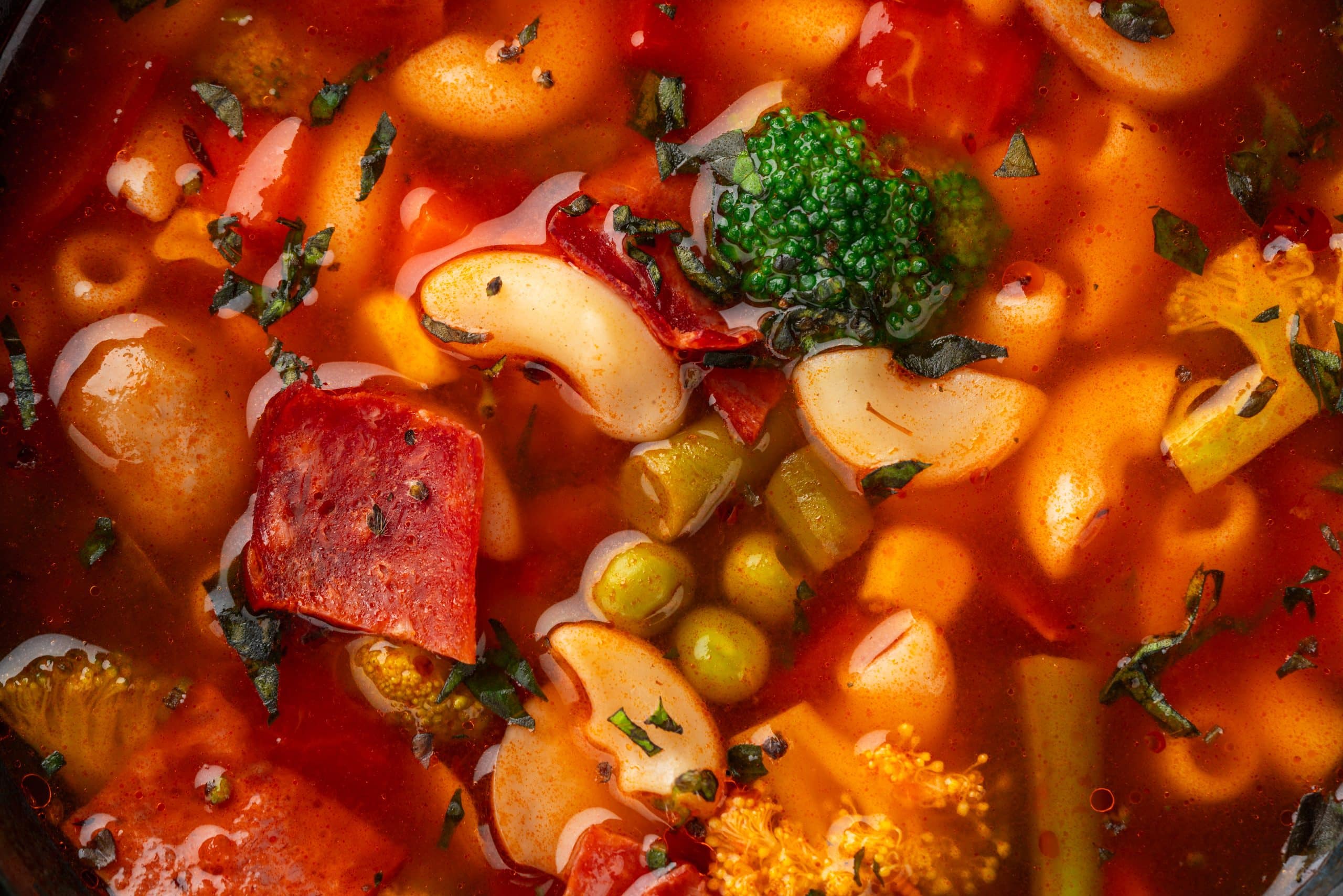
If there is one soup that belongs to every Italian region simultaneously and to none of them entirely, it’s minestrone. The word itself simply means “big soup,” and yet that understated name barely scratches the surface of what a proper minestrone can be. This is a soup with a biography. Its ingredient list shifts with the season, the region, and the memory of whoever is holding the ladle.
At its winter best, minestrone is a landscape in a bowl. Cannellini beans, softened to velvet. Cavolo nero, that deep Tuscan kale that turns almost sweet with a long, slow cook. Diced carrots and celery and onion, the Italian holy trinity known as soffritto, forming the flavour foundation on which everything else is built. Potatoes, thickening the broth. Rosemary and sage. A parmesan rind dropped in at the start and retrieved at the end, having given everything it had.
What separates a great minestrone from a merely good one is time. It cannot be rushed. The vegetables must surrender themselves to the broth, and the broth must, in return, absorb everything the vegetables have to offer. The result is something that is more than the sum of its parts, a bowl of such satisfying depth that you find yourself tilting it towards you at the end to catch the last of it with a torn piece of bread.
And that bread deserves its own mention.
Pane: The Essential Companion
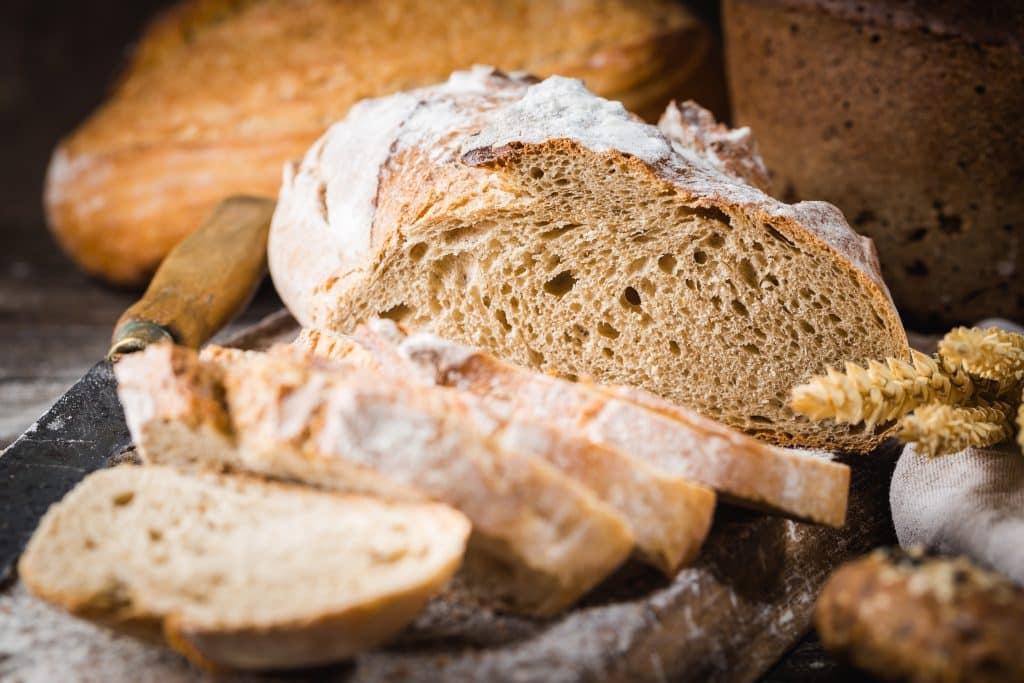
No Italian soup arrives at the table alone. Alongside it comes bread, and at Lygon Street restaurants, that bread is worth the visit on its own terms. A thick-cut slab of pane di casa, its crust shattering under slight pressure to reveal a soft, airy crumb. A slice of focaccia, dimpled and glossy with olive oil, perhaps scattered with rosemary or studded with olives. Grissini, those elegant breadsticks from Turin, for dipping and crunching between spoonfuls.
The ritual of bread and soup is one of Italy’s oldest and most honest pleasures. There is a reason the Tuscans built an entire category of cooking around it: ribollita, that magnificent twice-cooked soup of bread and beans and cavolo nero, is essentially minestrone taken to its logical, glorious extreme. Day-old bread is stirred through leftover minestrone and the whole thing is brought back to the heat, thickening into something so substantial it barely qualifies as a soup anymore. It is the Italian answer to what to do with yesterday’s dinner, and the answer is: make it better.
Beyond Minestrone: Full Italian Soup Season
Minestrone may be the queen, but the Italian winter soup repertoire is a generous kingdom. On Lygon Street, the cold months bring out a full court of warming contenders.
Pasta e Fagioli is the workhorse of northern Italian cucina povera, a thick, rustic marriage of pasta and borlotti beans that has fed generations of Italians who understood that the most nourishing food is rarely the most complicated. A drizzle of good olive oil at the table, a crack of black pepper, and you have something quietly magnificent.
Zuppa di Lenticchie, lentil soup, carries the earthy weight of the Italian south in every spoonful. Made with Castelluccio lentils when you can get them, and enriched with prosciutto or pancetta, it is the kind of soup that anchors you firmly to the present moment, to the warmth of the room and the goodness of the bowl in front of you.
Stracciatella, not to be confused with the gelato of the same name, is the Roman answer to chicken soup, a clear broth into which beaten egg and parmesan are stirred at the last moment to form delicate, silky threads. It is comfort distilled. It is what an Italian nonna makes when she decides you need looking after.
Acquacotta, meaning “cooked water,” is the Tuscan peasant soup that proves how much beauty can be coaxed from almost nothing. Onions, tomatoes, stale bread, a poached egg, and a generous hand with the olive oil. It is a lesson in restraint and resourcefulness that tastes like generosity.
Soup and Salad: The Lygon Winter Lunch
There is a certain kind of afternoon in Melbourne winter that calls for a long, unhurried lunch, and Lygon Street has been perfecting the format for decades. The soup and salad pairing is its most civilised expression.
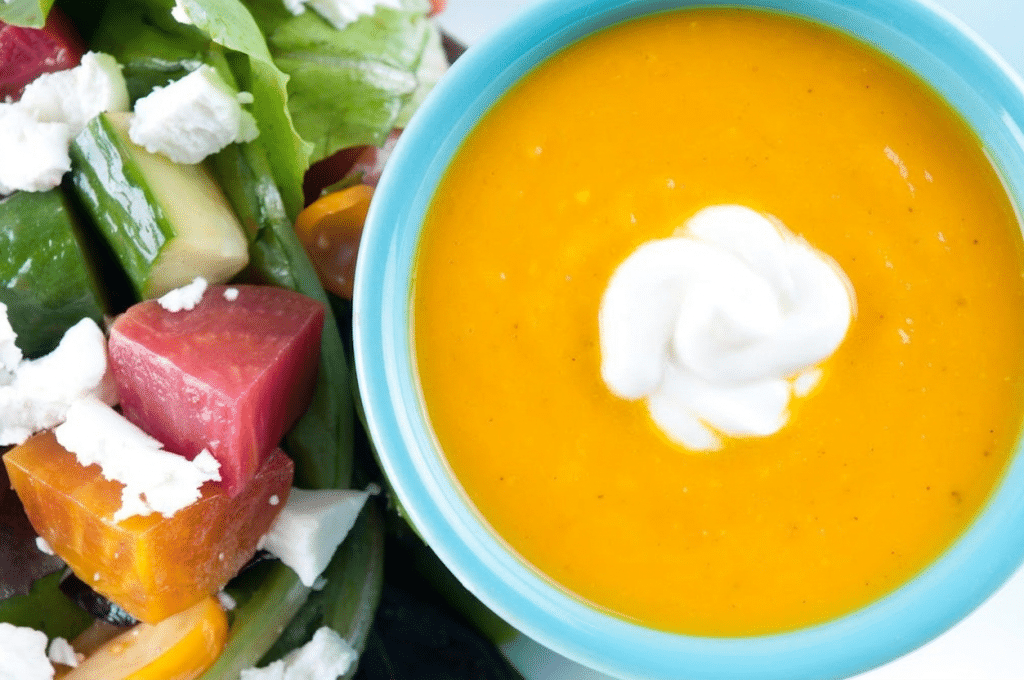
Alongside a bowl of minestrone or pasta e fagioli, a bright, bitter insalata cuts through the richness with welcome clarity. Radicchio, that gorgeous ruby-red chicory from the Veneto, dressed simply with red wine vinegar and olive oil. A panzanella, the Tuscan bread salad reimagined for winter with roasted capsicum and capers. A fennel and orange salad, crisp and aromatic, a reminder that even in the coldest months, Italy finds a way to be vivid.
This is the Lygon Street winter lunch: unhurried, generous, and rooted in the Italian understanding that eating well is not an indulgence but a way of taking care of yourself and the people around you. Order the soup. Order the bread. Let the afternoon unfold.
The Bowl That Connects Us
Every culture has its winter soup. The pot that simmers on the back of the stove while the wind rattles the windows. The bowl that has no official recipe because the recipe lives in someone’s hands and memory and instinct. On Lygon Street, that bowl is Italian, and it carries within it the accumulated warmth of every kitchen those recipes passed through on their way from Calabria and Sicily and Veneto to Carlton.
The best winter soups in Melbourne are not always the most elaborate. They are the ones made with patience and good ingredients and the quiet understanding that some things, a long slow braise, a well-tended pot of minestrone, a torn piece of bread, cannot be improved upon. They only need to be made, eaten, and shared.
Come in from the cold. Find a table. Soup season is here, and it’s cosy good.